

SIG Sauer P6 Review: The Essence
It’s the idea of the P6 that hooks you.
The promise of truth, justice and no-BS German engineering. The allure of pragmatic precision, rendered in clean, cohesive design. The P6—aka P225—hearkens back to a time when the question of “what really matters” in a handgun had but one answer:
Functional excellence.
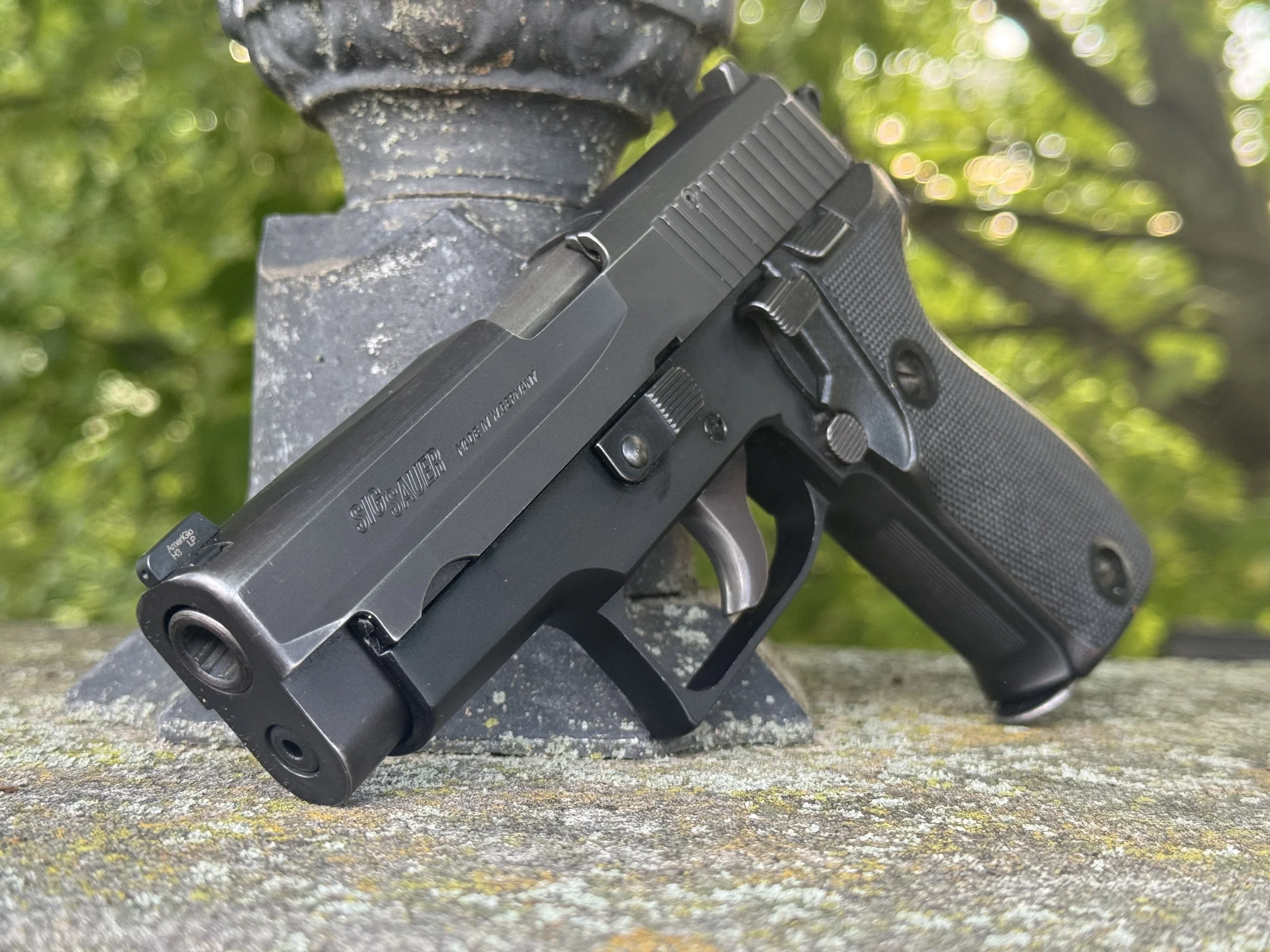
1982 called… but I’m keeping their P6.
And while buying a gun to indulge your sense of ontological purity is… just fine. It’s honestly a disservice to the P6.
Because the P6 is more than just an ideal. It’s more than just an aspirational expression of Teutonic minimalism. It’s more than just a gun hipster’s ideological paradise, beckoning from the thumbnails of an overpriced GunBroker listing.
It’s a pistol that does everything you need a handgun to do. Very, very well. Even in 2026. Even in a world with red dots, G10 grips, integral comps, and surprisingly catchy AI hip hop.
Even with just eight freakin’ rounds in the mag.
What makes the SIG P6 HipTac worthy?
A timeless icon of pragmatic elegance, the P6 combines efficient design with intuitive handling—traits that still make it a uniquely worthwhile weapon, even after 50 years.
The P6 is visual onomatopoeia: it looks like what it is.
Its squarish silhouette exudes a distinctively utilitarian allure. Its simplistic lines convey a sense of purpose and authenticity. The stubby—yet agreeably stout—slide towers over the frame, offering a deft counterpoint to the swoopy contours of the grip.
And its form echoes its function. The P6 shoots, handles and carries extraordinarily, exceptionally, stupendously and outstandingly …
Umm…
Good.
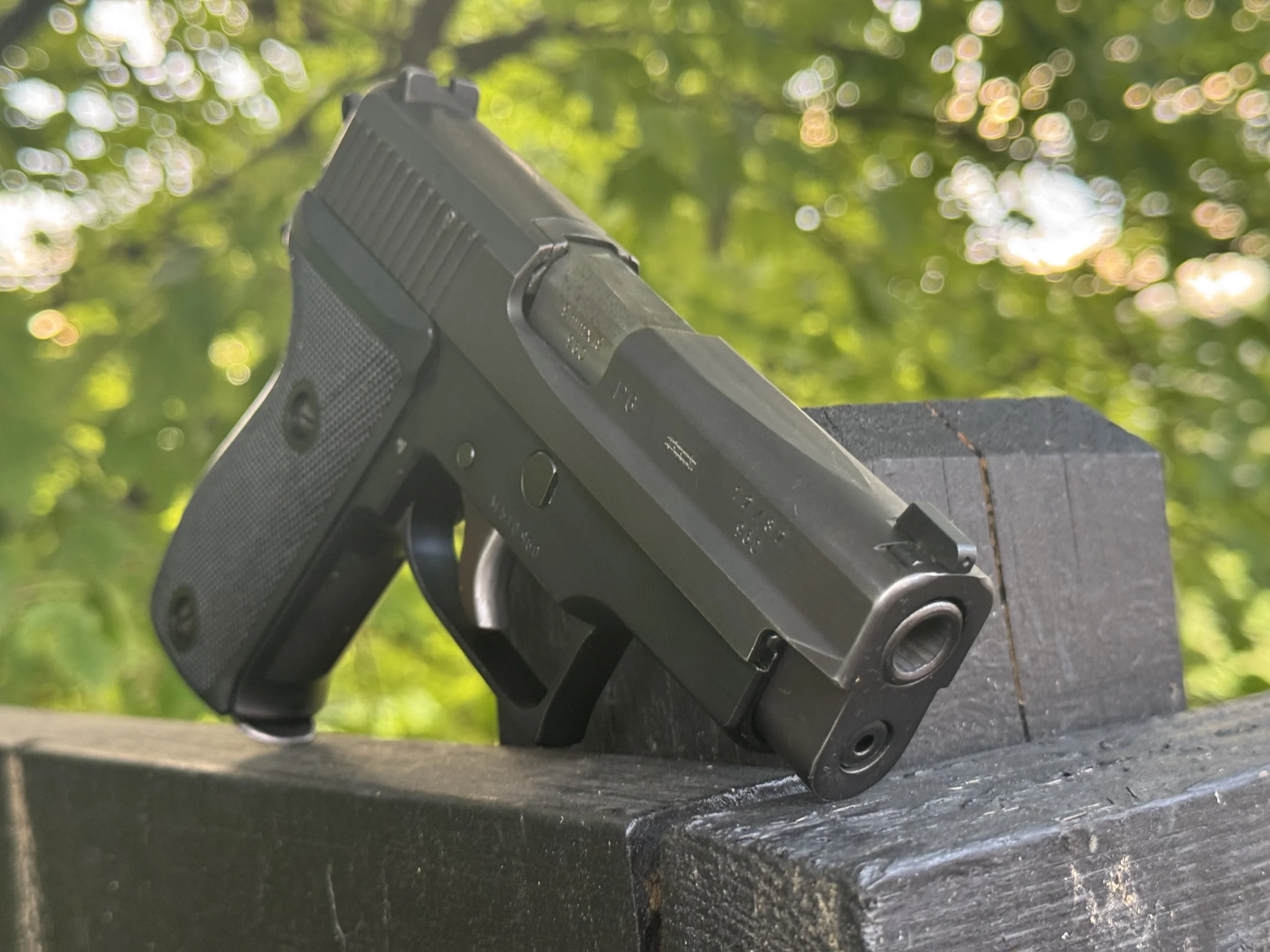
It looks rad… because it’s rad
Best of the Good
Let’s get one thing straight, ja? The P6 isn’t “the best” at anything.
Similarly sized Berettas & Walthers offer more intuitive shooting dynamics. Slightly.
A Browning Hi Power and a CZ-75 handle more naturally. Barely.
HKs take the whole “Germanic perfection” thing to a higher level. Kinda.
No, the P6 isn’t patently outstanding in any singular way. But when you compile its respectable—if not exceptional—merits across the spectrum of handgun aptitudes, what you’re left with is…
A pistol that’s bad at nothing, and d@mn good at everything.
There’s something elegant about that. Something real. Something that strikes the ideal balance of not being more than it needs to be, while still being extremely capable, across the board.
Which the P6 most certainly is. And has been, since 1977.
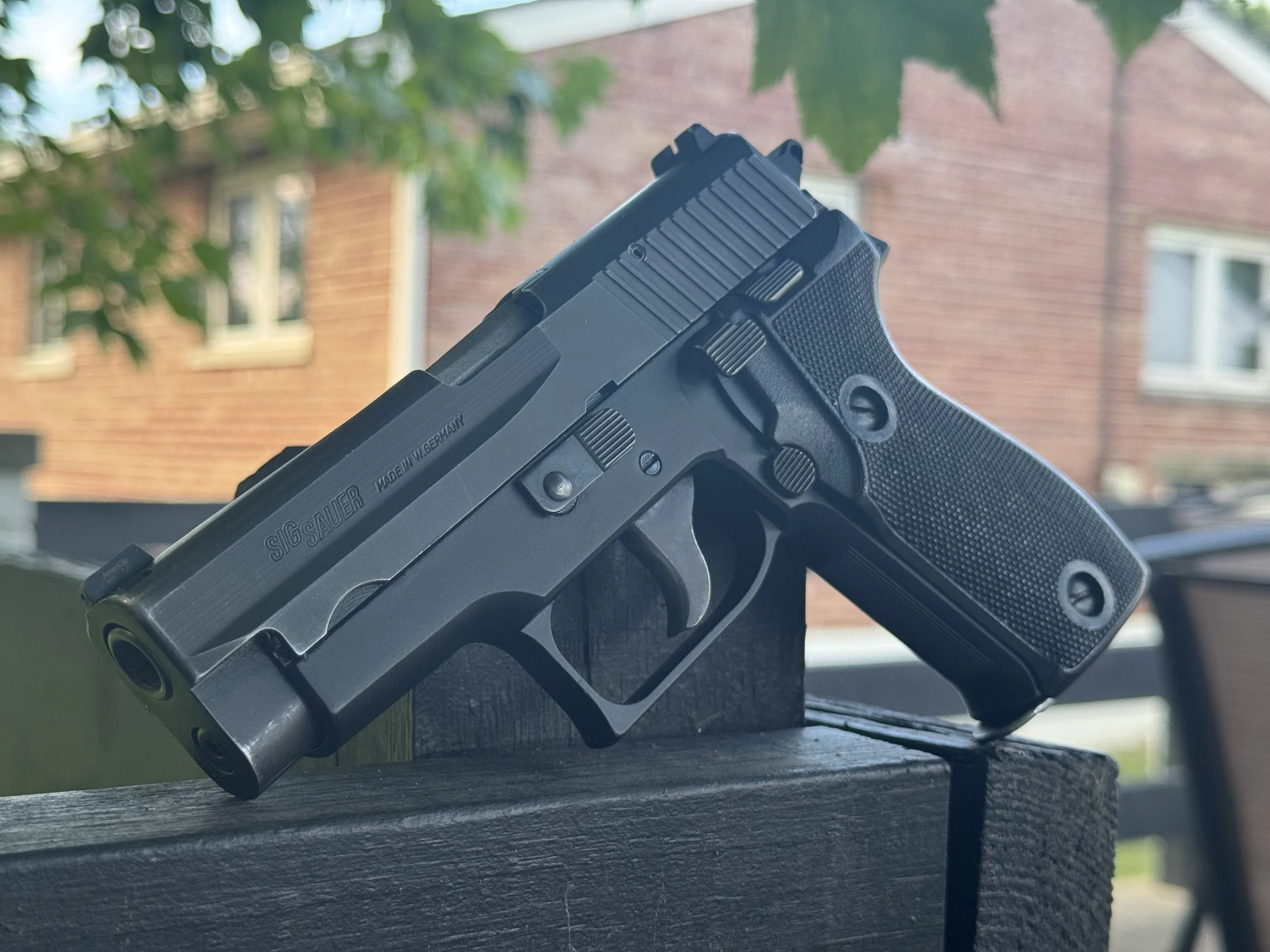
Far out, man…
Bee-Gees & Star Wars
Yup. The P6 is basically 50, as of this writing. Like the bassline from Stayin Alive and Darth Vader’s menacing one-liners
And by now, the history of the P6 is more or less canonized on the internet—90% of the people reading this could probably write this section from memory.
Nevertheless, here are the highlights:
“P6” is simply the German police designation for the SIG P225—which is a compact version of the P220.
All P6s are P225s. Not all P225s are P6s.
P6s have heavier hammer springs and slightly different hammers vs. “regular” P225s (See appendix for more info).
The P6 competed against the Walther P5 and the HK P7 for German police contracts in the 1970s and 1980s.
The P6 became the most widely used of those three guns—allegedly because it was the least expensive.
The P225 platform was gradually replaced by the P239, starting around 1996.
The P225-A1, made from 2015 – 2018, shares no parts with the original P225/P6.
The P225-A1 is essentially a P239 that’s been restyled to look like a real P225.
So, then…
What else can I tell you about the P6’s history that you don’t already know?
Well, I’m not sure. But I can give you perspective.
SIG’s Big Break
I think, maybe, we underestimate the importance of the P6 to SIG Sauer as a company. And, subsequently, to modern handguns in general.
Though SIG’s P22X platform was originally designed for the Swiss Army, German police agencies became the largest buyers of SIG Sauer pistols by the end of the 1970s.
The vast majority of these were P6s.
The police of Nordrhein Westfalen (NW)—Germany’s largest LE agency—made extensive use of the P6, as did several other state and federal agencies. In the U.S., you see more “NW” marked P6s than anything. My 1982 P6 served with the Bundeskriminalamt (BKA), which is a federal agency, kinda like the FBI. I had an NW gun for a while, too.
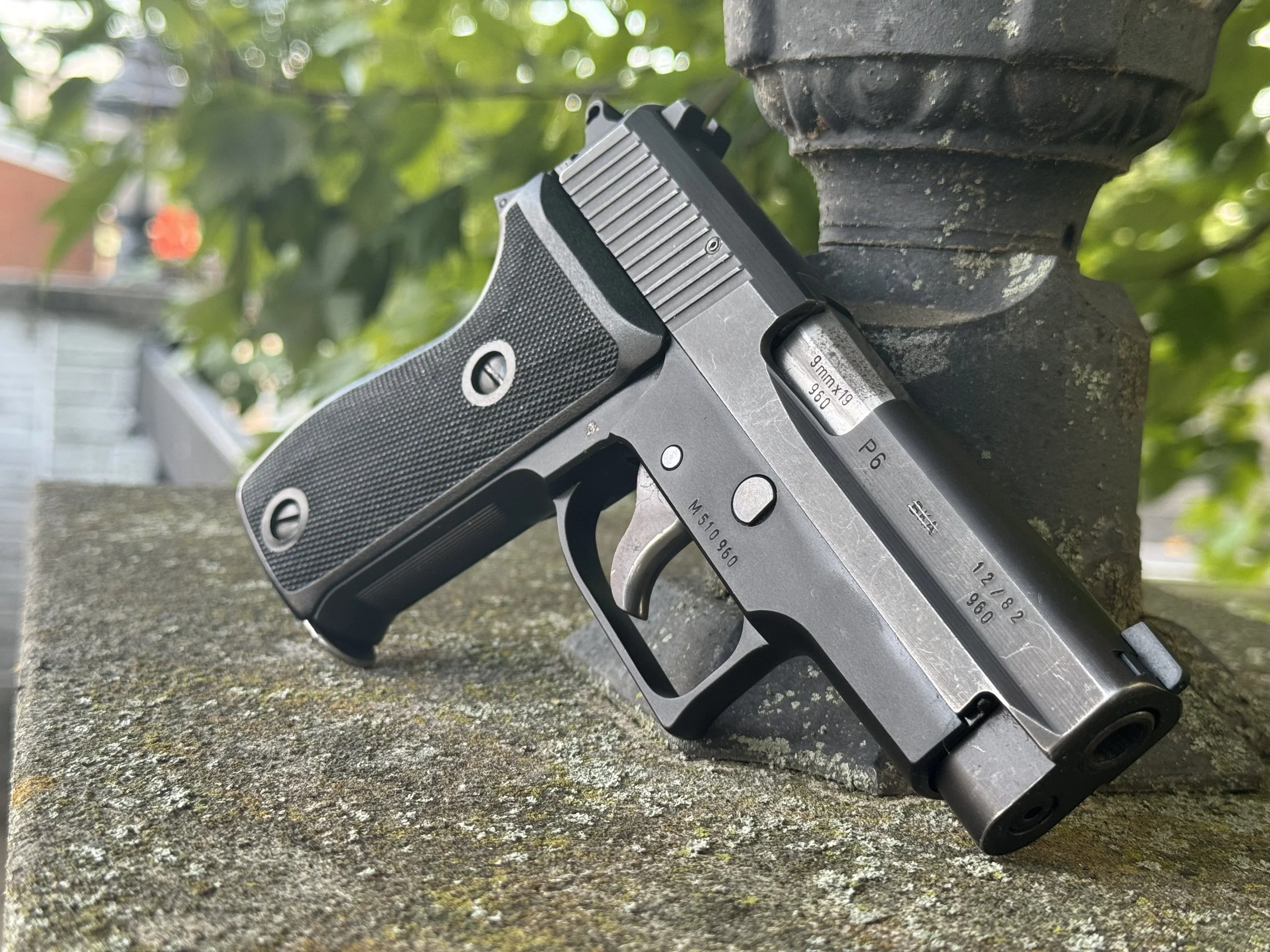
Note the crossed-out “BKA”
P6 production continued into the 2000s, with minor tweaks to the platform in 1989 (feed ramp, slide bevels). In addition, SIG had numerous non-German LE contracts for the P225: Israel, Sweden, Canada, Switzerland. Some U.S. agencies also issued P225s to detectives.
Until the P226 stole the show in the late 1980s, the P6/P225 was really SIG Sauer’s bread-and-butter.
Since we’re talking about ‘80s guns…

Have you ever wondered about the economics of gun ownership in the era of pastel blazers and Ferrari Testarossas? The price of ammo in 1986 tells us an fascinating story.
Read it here, at the Widener’s blog.
Throughout the latter 20th century, the P6 earned a reputation for rugged, reliable performance and intuitive handling qualities. Plus, it’s a handy size and (as previously extolled) it’s simply a classy, good-looking chunk of engineering.
And again, while it may not be a “superstar” in any singular respect… you don’t really hear of anyone disliking the P6. I certainly like it.
To that point…
Let’s talk about how the thing handles.
More Than a Handful
The moment you wrap your hands around a P6, you feel something. Something good.
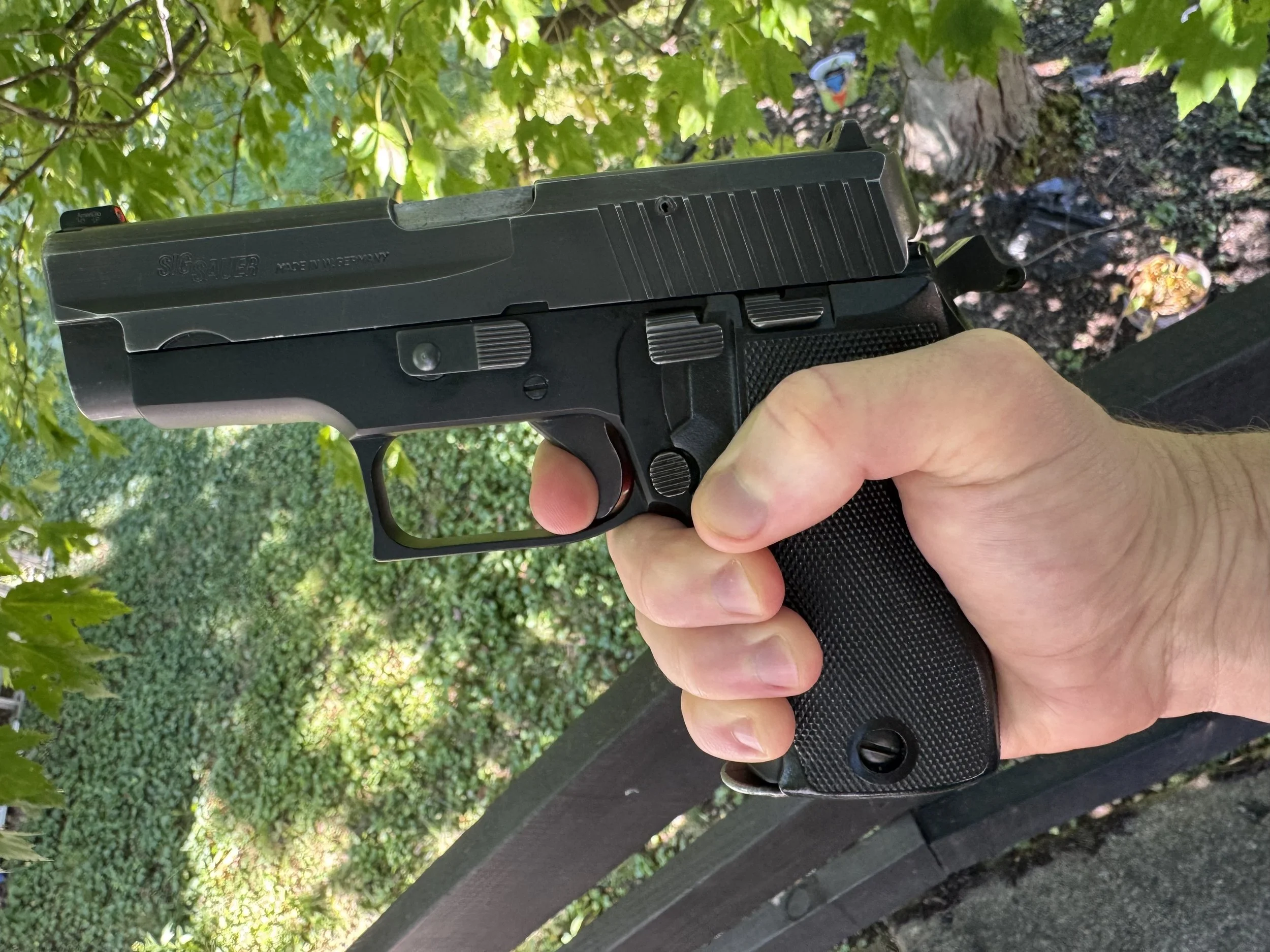
It never disappoints
The factory grips fill your hand in a way that feels satisfyingly complete.The rounded sides seamlessly track the curvature of your palm. The swoop-a-licious backstrap nestles snugly into your heel crease. These calculated curves fill every potential gap between your hand and the grip—which gives you 360 degrees of continuous contact.
In other words: The thing just feels phuqqin’ great to hold.
I’m not exaggerating when I say no other handgun I’ve experienced fills the hand so naturally and so completely… without feeling too big. I’ve tried Karl Nill grips and Hogue G10 grips for the P6/P225, and I always come back to the factory grips.
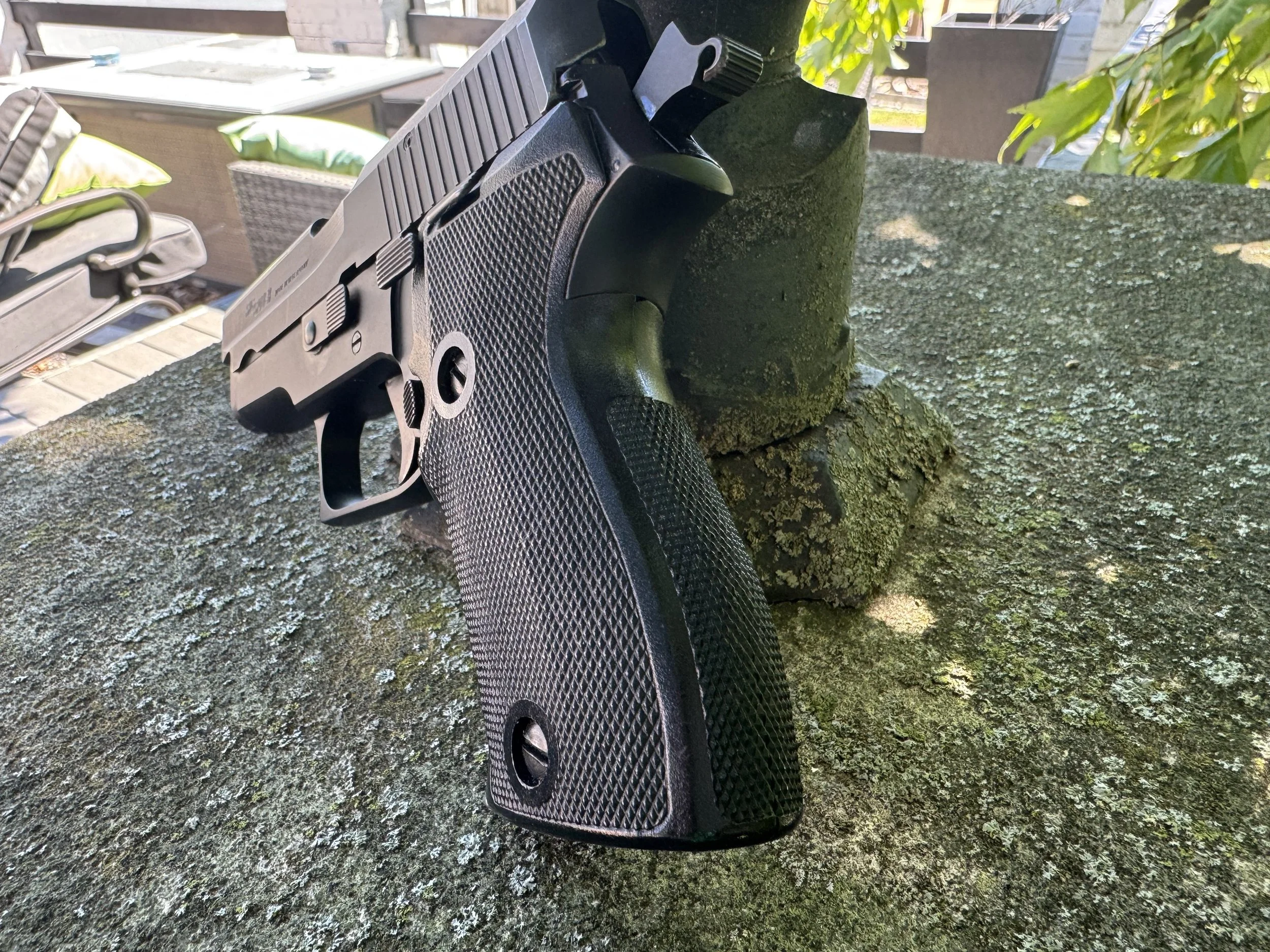
Those curves…
In single action, the stamped trigger angles back to offer your finger an agreeable point of contact. With my short digits, the trigger face naturally aligns with the pad of my finger—as opposed to the distal joint.
And with the buxom contours of grip supporting the rest of my hand, I feel ready to…
Rock & Roll
BANG!
The P6 recoils like a 1980s power ballad. It literally rocks… up and down.
The P6, like all classic SIGs, has a high bore axis. The barrel sits high above your hand, at the top of the gun’s towering slide. Which means…
BANG!
…the muzzle kicks up as it cycles. Gently. Predictably. Confidently. But there’s no fighting physics: the high bore axis creates a cantilever effect when the gun recoils.
BANGBANGBANG!
With a firm grasp on the ergonomically enlightened grip, the muzzle falls naturally back on target. Seamlessly and effortlessly. There’s no reason you can’t shoot this thing fast. The factory reset isn’t exactly short, but the single-action break is crisp and responsive.
In double action… it’s reasonably smooth and consistent. As you long as you replace the 28lb factory mainspring (see appendix).
Moreover, the high bore axis provides an under-appreciated benefit:
Since more recoil energy gets diverted UP, less of that energy goes back into your bones. Plus, the gun’s substantial build and dreamy ergos transform that mild rocking sensation into…
A tactile cue.
BANG!
You feel the gentle lift of the muzzle. You prep for the next shot. And as soon as your sight picture levels out…
BANG! BANG! BANG!
Shot after shot after shot, the P6 lulls you into a consistent rhythm. With your hands glued to its curves and its heavy slide soaking up the recoil, the gun feels reassuringly steady, composed and predictable. If you do your part, it delivers solid accuracy.
To put it simply, shooting the P6 is just…
“Nice.”
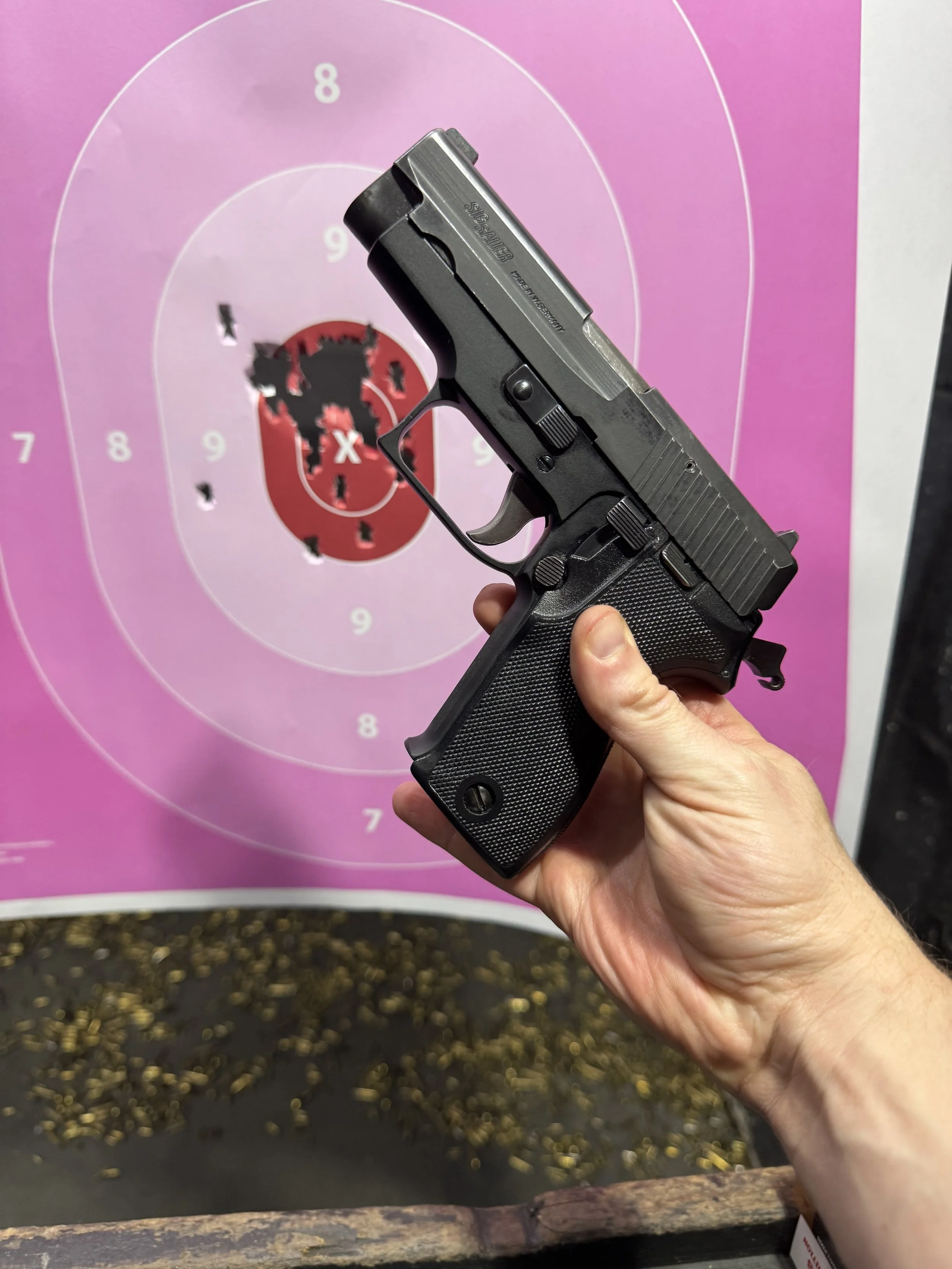
50 rounds @ 10 yards
Some Kinda Nice
Not “Niiiiiiice.”
Not “NICE!!”
Not even “Noice!”
Just, “Nice.” Simple. Genuine. Unpretentious. That’s the sentiment I’m left with after every range trip with the P6. It puts rounds in the ten ring consistently, reliably and pleasantly. In that, it evokes a feeling that’s consistent with its poetically purposeful essence.
It never leaves you disappointed. It never blows your mind. And while I always enjoy taking the P6 out for a spin…
I ain’t gonna lie: I like taking my P5 out more.
P5s, P6s and P7s—Oh My
As mentioned, the P6 outsold its primary German competitors—the Walther P5 and the HK P7—throughout the ‘70s and ‘80s.
But not because it’s a better-shooting gun.
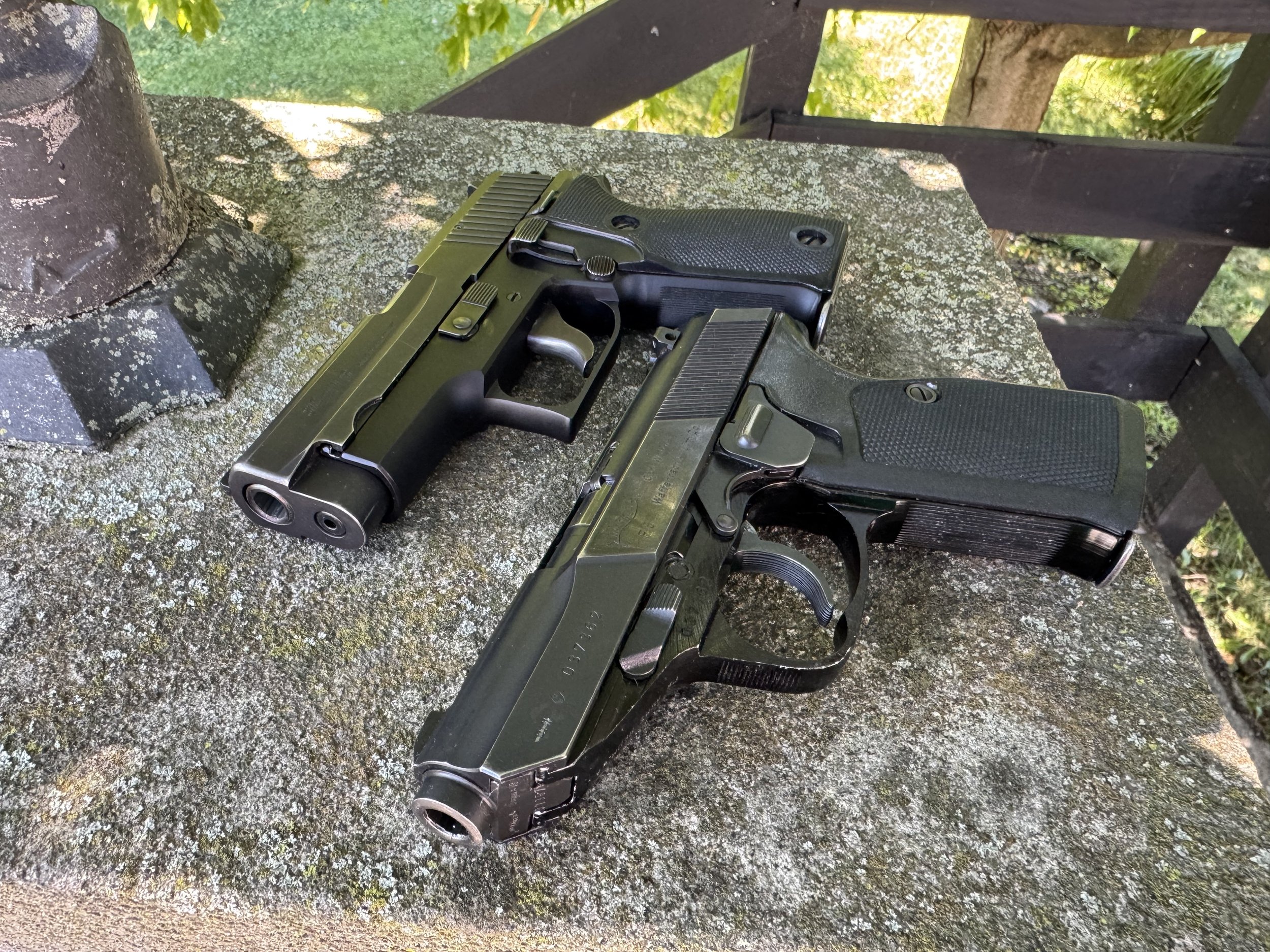
1982 P6 + 1984 P5
Owning a P5 and having some trigger time with a P7, I’ll say that both offer a more refined, more “specialized” shooting experience compared to the P6. Check out the links above for more insights into how the P5 and P7 shoot. But, to boil it down:
The P5 offers a uniquely smooth—yet delightfully responsive—feel, thanks to its locking-block recoil system and dual/parallel recoil springs.
The P7 offers a laser-beam sense of accuracy, thanks to its fixed-barrel design—yet its gas-delay system buffers the abrasive feel present in most fixed-barrel pistols.
In terms of the trigger, the P6 feels the most “basic” of the three. The P5’s SA trigger offers the cleanest break, while the P7’s trigger is the lightest.
Net: The P5 and P7 are more “purebred” shooter’s guns than the P6. I think anyone who’s spent time with all three guns would tell you pretty much the same thing.
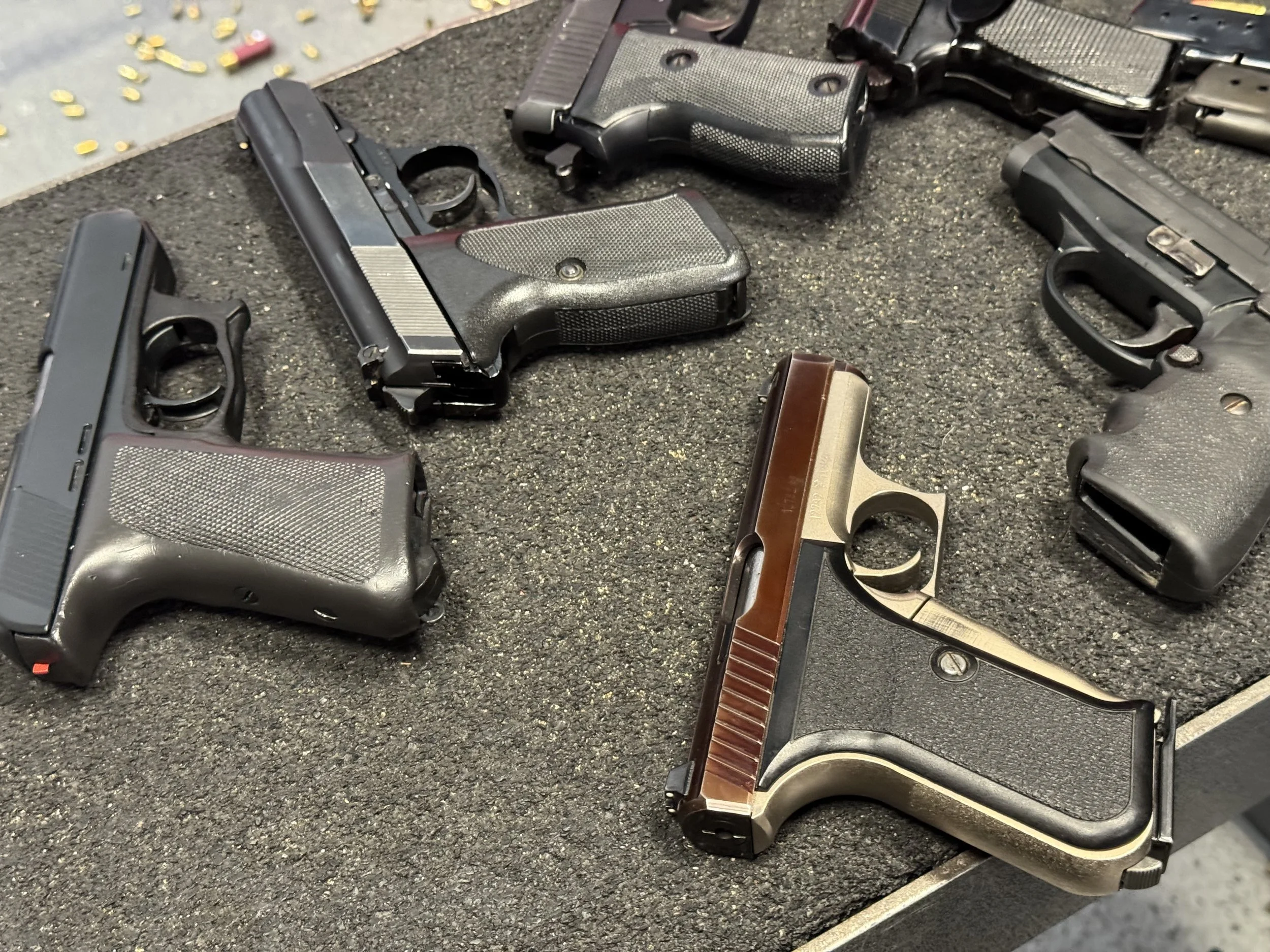
HK P7 + some other legends
Tactical Telepathy?
Now, that doesn’t mean the P6 is a slouch. The solid feel, excellent ergos and the predictable recoil dynamics all contribute to a positive shooting experience.
But the P6 lacks that “telepathic” sense of connection you get with some guns.
For Instance: Whereas the P5’s locking-block system smooths and tempers the recoil into useful context, the P6…
Just shoots.
The recoil is mild and agreeable—but it’s just recoil. It’s not an asset. It’s a momentary lapse in your sense of connection to the shooting experience. Once you find the rhythm of how the muzzle rises and falls, it’s easy to shoot quickly and accurately.
But…
With the P6 (and most other classic SIGs, honestly) sometimes I’ll get a flyer, and I can’t really tell you why. By contrast, with a Walther P5, a Beretta 92, a Beretta PX4, an HK P9S… you feel it before you see it. And as good as the grip feels on the P6, I find that the Browning Hi Power’s ergos offer a more intuitive sense of connection overall—in terms of handling and pointing.
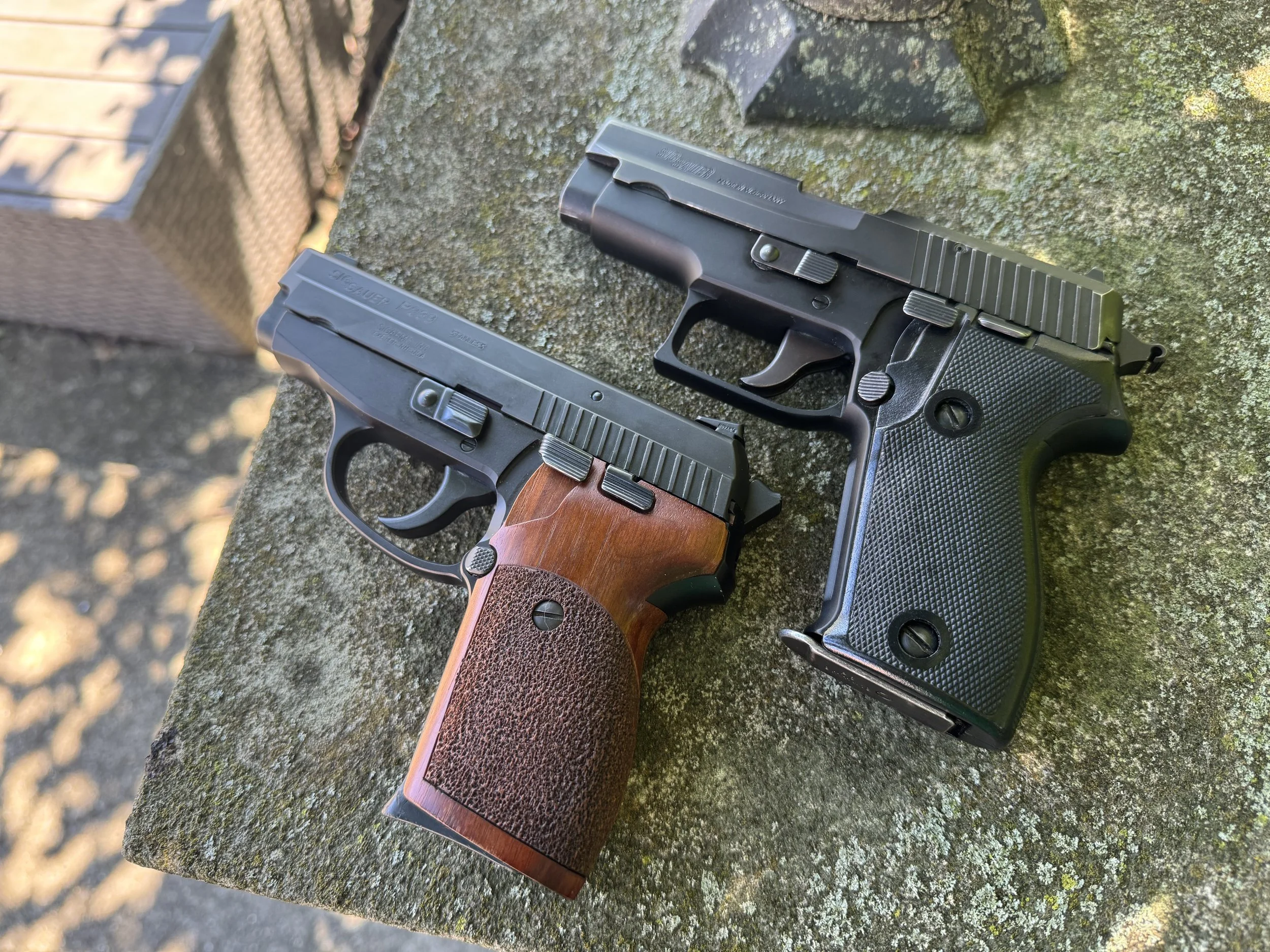
P6 + P239 w/ Nill grips
No, the P239 doesn’t feel quite as dreamy to hold. But, for me, it offers a better relationship between hand and trigger. Of course I have really small hands, so your mileage may vary. Nevertheless, I find the P239 extremely accurate and shootable, regardless of its size.
Same with the P245—which is probably the most under-appreciated gem of all SIG pistols.
But remember…
The magic of the P6 lies in its ability to good at everything… not the best at anything. So, let’s talk about the P6’s other merits.
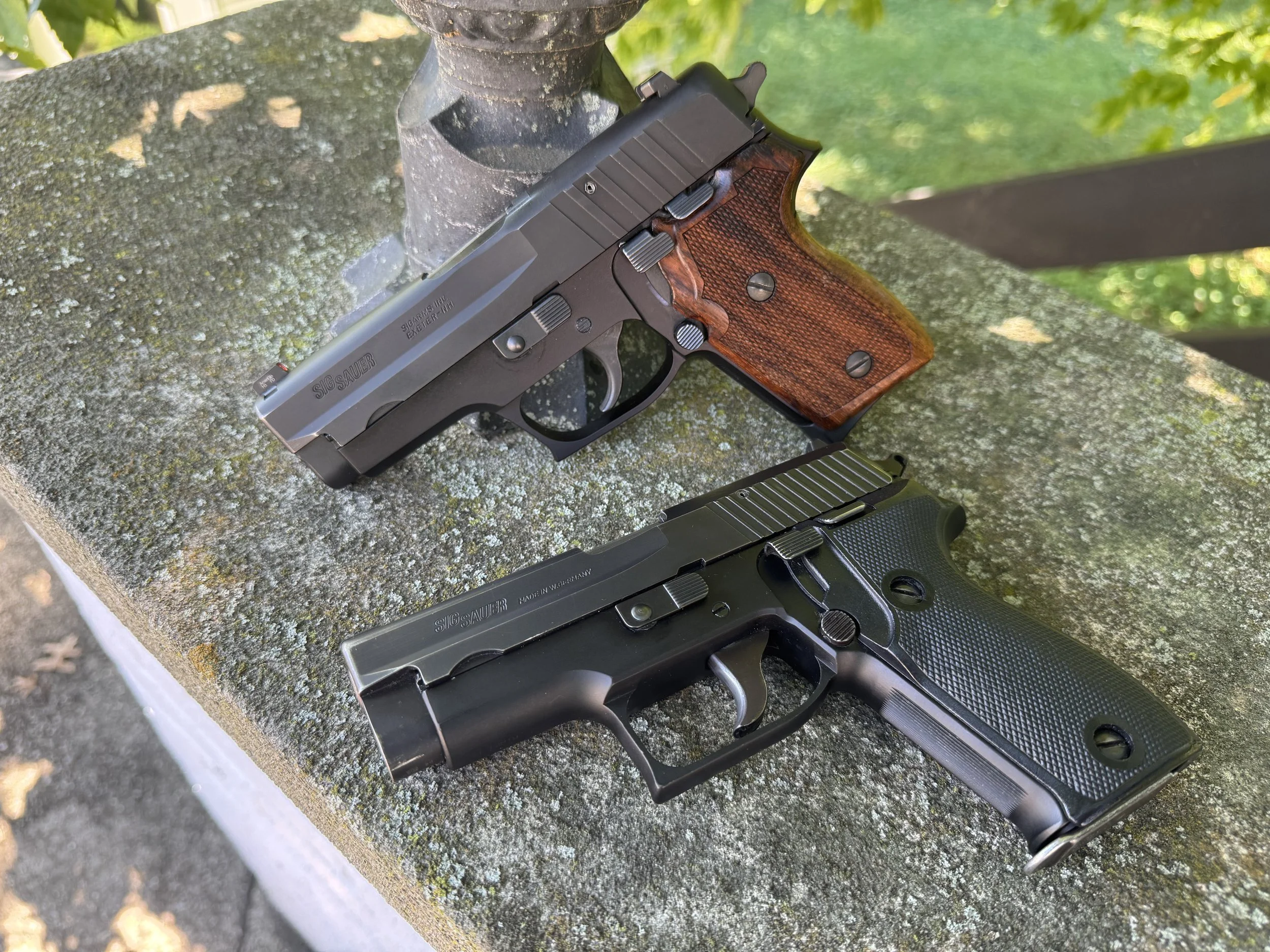
Plug for the P245
Reliably Robust
I’ve owned two P6s and one commercial P225 in my career as a gun hipster, with thousands of rounds through all three.
The only failure I’ve had was loading from slide lock with the rails slathered in TW25B grease—which I think is too thick and viscous for a gun lubricant, personally. The recoil spring was also pretty worn in that gun. Though it always worked 100% with regular gun oil.
As for durability…
A local gun shop employee told me he put 60,000 rounds through his P6. I believe him. P226s are known to handle six-figure round counts. I don’t think a P6 is far off.
Like all classic DA/SA SIGs, the P6 has a beefy alloy frame with a steel insert that cams the barrel. Moreover, the lower feed ramp is built into that same steel insert… which connects to the barrel’s integral feed ramp.
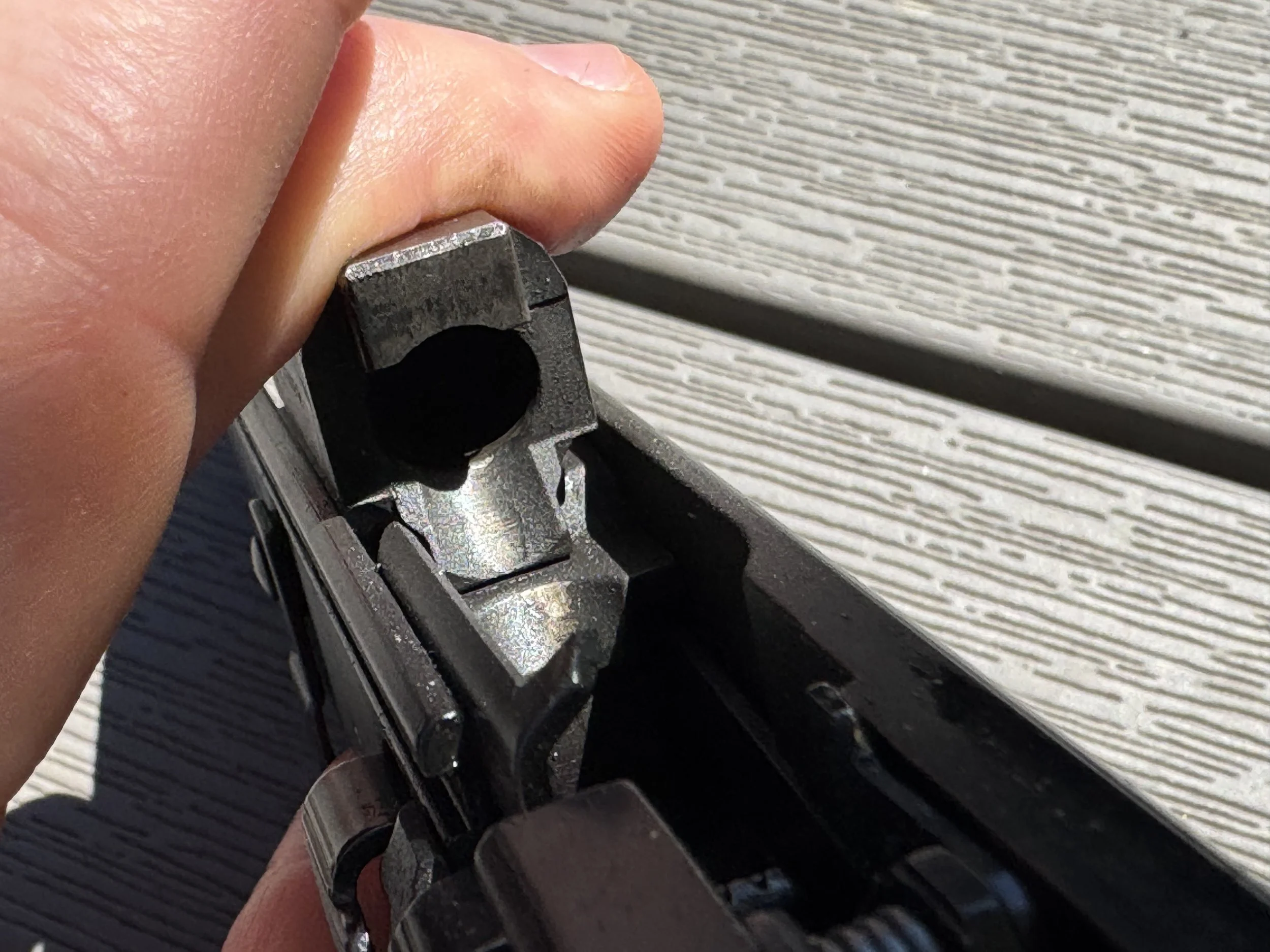
The barrel ramp and the lower ramp—all steel
So, the gun feeds—and the barrel cams—entirely on hardened steel. That’s not the case for the Walther P5, for instance. Or even a Beretta 92. And while aluminum alloy isn’t weak, by any means… I think a P6 is gonna outlast a P5 in a high round-count torture test.
Also…
The P6 carries better than it should.
West German in Your Waist?
Maybe it’s the way the grip lays against my spare tire? Maybe it’s more stable in the holster because the slide is longer compared to smaller guns?
I dunno.
But for whatever reason, I’ve always found the P6 to carry quite comfortably for a gun its size. It might even carry a bit more comfortably than a P239—even though the P239 is smaller.
Now, the P239 conceals better, thanks to its shorter grip. And it’s not like the P239 is unpleasant to carry. But the P6 just rides soooo nicely in the appendix position. And it still conceals better than a double-stack P229 or P228. It’s also thinner than a P5, so it feels less bulky in the pants.
Overall, the P6 hits a certain sweet spot for size. It’s handy. It carries well. And it’s still big enough to feel like a legit service pistol.
And that brings us to the P6-4000 dollar question:
Should you make an old-school P6 your go-to carry gun?
Hollow Promises
Maybe?
Those of you who know the P6 (which is probably most of you) already know what I’m gonna say:
‘70s and ‘80s P6s suck at feeding hollow points. FMJ rounds were the only game in town for German law enforcement back then, so the feed ramp is designed for that. And only that.
That’s true. But… I did a run a few mags of Federal Hydrashok through this 1982 P6…
It never choked.
Now, don’t expect that to be the norm. I think it depends on the ammo and possibly the gun itself. For instance, some JHPs have a more rounded ogive—like Cor-Bon Pow’RBall—and I’ve read those work fine in the early P6s.
As the story goes…
Around 1989, SIG updated the feed ramps on the P6/P225 platform to feed hollow points better. There are some comparison pics floating around on Sigtalk that show early and later P6/P225 feed ramps. There’s definitely a difference. But it’s subtle.
Bottom line: If you want to carry a P6, there are JHP options that will work no matter what kinda feed ramp you have. You just have to be a bit more selective.
Now that we’ve covered that…
There is one other objectively negative critique I’ve heard about the P225/P6.
Feed Lip Spreading
I know. It sounds like something you’d see on another kind of website. But—for our purposes—it refers to the potential for the magazine feed lips to…
Spread. If the mags stay fully loaded for prolonged periods of time.
Apparently (allegedly?), when the mag spring is fully compressed under a stack of eight rounds, it puts a lot of pressure on the underside of the feed lips. So, they kinda bend outward over time. Which means cartridges don’t have proper guidance when feeding into the chamber.
Massad Ayoob mentions this phenomenon in his Gun Digest book on SIG Sauer pistols. I’ve also seen it come up in threads on pistol-forum.com.
I’ll say this: I’ve used some old-@zz magazines in my P6s/P225. Maybe, the top round was little more loosey-goosey in the older mags? Maybe?? But even the older mags I used always fed fine.
I brought this issue up on Sigtalk a while back, and the resident gurus/armorers seemed to think this would only be an issue if the welds on the mag spine actually failed. Which makes sense. Plus, I don’t hear of other single-stack 9mm magazines doing this… and I don’t see how P6 mags are meaningfully different design-wise from, say, Walther P5 mags.
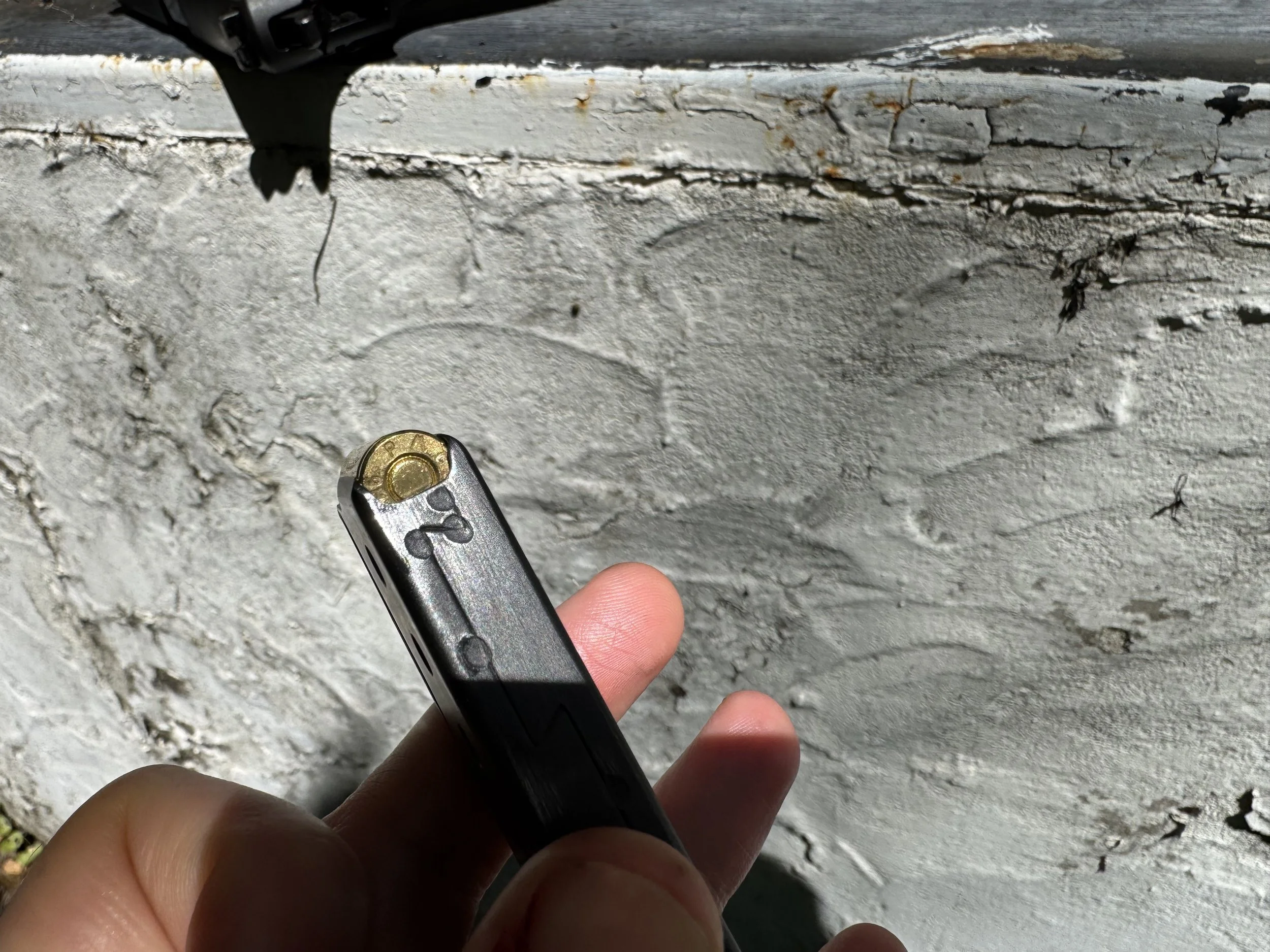
Welds seem solid, to me
Anyway…
I wouldn’t let this dissuade you picking up a P6. Even if there is some truth to it… things wear out if you use them a lot. That’s life.
On that fatalistic note…
I think it’s time for a poignant conclusion.
Poignant Conclusion
So…
It’s old. It doesn’t feed most hollow points. There’s nothing magical about how it shoots. It’s big for its capacity. And by now, it’s a fairly expensive proposition when you find one for sale.
But…
When you feel that reassuring heft and those hand-filling curves… you get it.
When you behold the authentic German quality and ingeniously efficient design… you get it.
When you feel that predictable sense of stability, shot after shot… you get it.
When you realize how well it carries, no matter what you’re doing… you get it.
When you realize the P6 does everything that matters competently and effectively…
You get it.
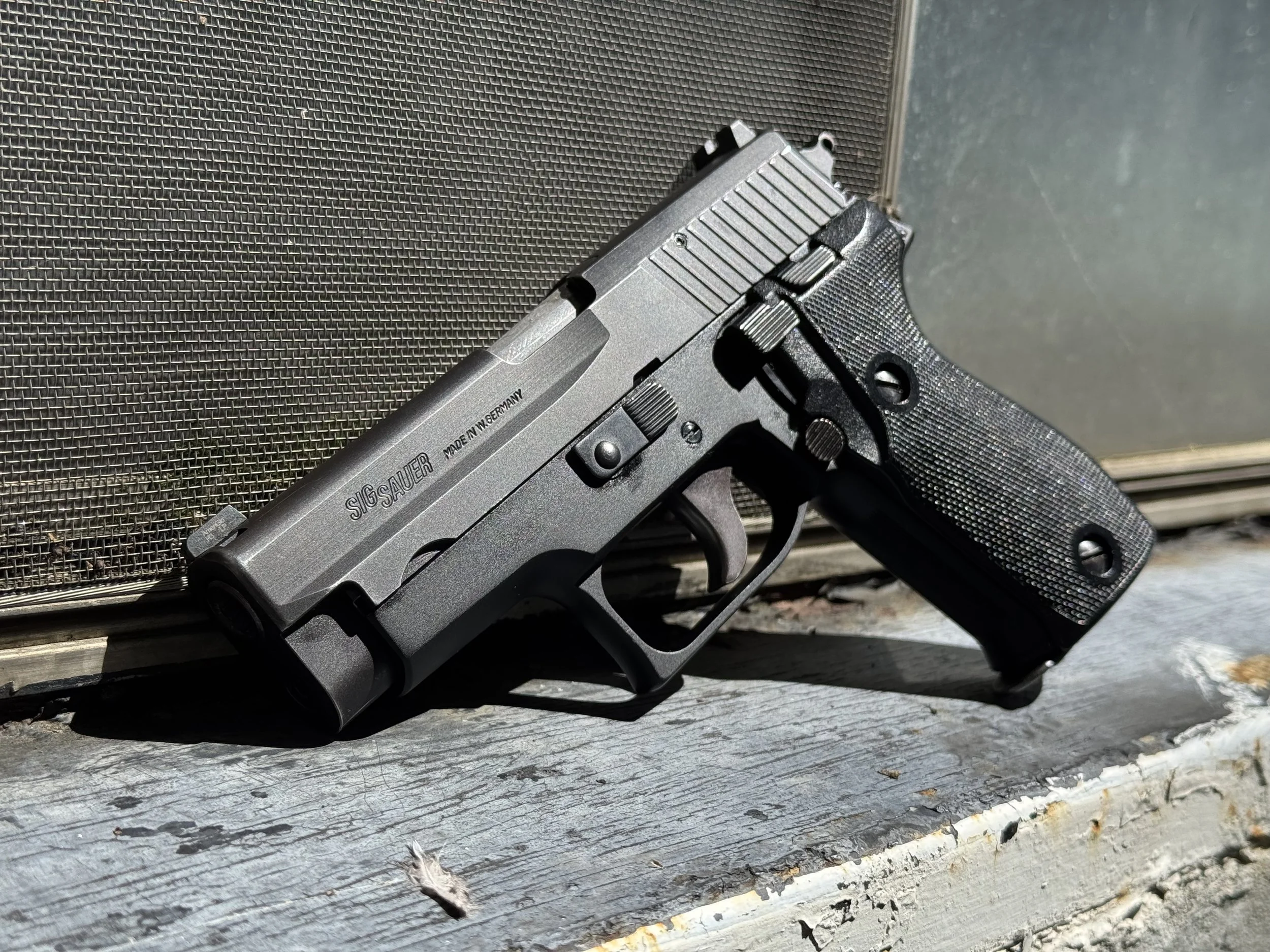
Pragmatic elegance since 1977
The SIG Sauer P6 embodies the authentic—and functionally superb—essence of everything a service pistol should be. Nothing more. Nothing less.
And that’s beautiful. Just like the P6.
Thank you so much for reading.
What are your thoughts on the SIG Sauer P6? Experiences? Opinions? Scathing condemnations on my review? Feel free to share below…
#hiptac
APPENDIX: Swapping the Mainspring Setup on a P6
From the factory, a P6 will come with a 28lb mainspring (i.e., hammer spring). It’s silly.
You can, of course, swap a lighter mainspring right onto the factory strut. But that requires you to compress the mainspring AND drive out a roll pin.
Ugh.
The best approach is to replace the whole strut assembly with modern SIG parts. So, fire up a Google search and find either of these factory part combinations:
Combo 1: SIG HAMMER-STRUT-6 + SIG MAINSPRING-SEAT-1
Combo 2: SIG HAMMER-STRUT-8 + SIG MAINSPRING-SEAT-2 (these are the “E2” parts)
Either setup will work in a P6. Though you CANNOT swap parts between combo 1 and combo 2.
You’ll also want a 19lb SIG mainspring from Wolff (for either part combo).
Online retailers are always changing inventory, but check Midwest Gunworks, Matrix Precision, Midway USA for the struts and seats. There’s always eBay as well. Also, I think some of the parts in combo 1 might be discontinued, as of 2026? Not 100% sure.
There are also aftermarket strut configurations from Grayguns and Armory Craft. Those can probably work too, but I don’t have personal experience with either product.
Anyway…
These are essentially the same parts that P229s use. They fit the P6 just fine. You can go lower on the mainspring weight. But 19lb will give you a clean DA pull and it’ll pop any primer. That’s what I have in mine. It’s very nice.
ALSO IMPORTANT: If you want to use the factory grips with the modern parts, you’ll have to Dremel some of the interior ribbing on the grips. There’s a diagram on Sigtalk showing exactly what to Dremel—but it’s pretty self-explanatory when you look at the inside the grip.
© 2026, Hipster Tactical